The Nordic capitals look temptingly close when reduced to a screen of markers. On the ground, coastlines, water crossings and airport locations shape the experience. Begin with the kind of day you enjoy: waterfront walking, architecture, galleries, food markets or access to landscapes. Then ask whether the next destination offers something different without consuming too much of your available time.
“Scandinavian” is commonly used for Denmark, Norway and Sweden. This guide also covers Finland and Iceland as part of the wider Nordic region. That distinction matters less to an itinerary than transport geography, but it helps explain why a five-country journey is not one simple rail circuit.
Start with a coherent pair
Copenhagen and Stockholm make an approachable first pairing. Copenhagen offers compact neighbourhoods, cycle-oriented streets and a strong harbour focus. Stockholm spreads across islands, with larger shifts between historic streets, waterfront museums and residential districts. A rail journey can connect them, but check the actual date before assuming a particular service is direct.
Oslo and Bergen suit travellers who want the journey itself to carry weight. Oslo combines civic waterfront redevelopment with major art collections; Bergen puts a historic harbour beside steep terrain. They are both in Norway, which can simplify currency handling, but a long rail transfer still deserves its own place in the schedule. Same country does not mean negligible travel time.
Stockholm and Helsinki bring two different maritime capitals together. An overnight ferry may be useful if the departure, cabin and arrival suit you. It is not simply a free hotel: compare the complete fare, sleep quality, terminal access and lost evening against other options. Reykjavík works better as a deliberate flight-based branch than an assumed continuation of a mainland rail route.
| Pair | Best reason to combine | Main planning friction |
|---|---|---|
| Copenhagen + Stockholm | Contrasting capital-city neighbourhoods | Train availability and route changes |
| Oslo + Bergen | Urban culture plus a scenic rail journey | A substantial travel day |
| Stockholm + Helsinki | Island cityscapes and an overnight crossing | Cabin, terminal and local-time details |
| Reykjavík + a mainland hub | A distinct landscape and cultural chapter | Flights, airport access and extra cost |
Build walks around clusters
In Copenhagen, begin around Nyhavn and continue towards the Royal Danish Playhouse and the harbour. Add a canal crossing or a museum only after checking the walking distance and opening hours. Architecture that looks adjacent across water may require a longer route than expected. Keep cycle lanes clear when pausing for photographs.
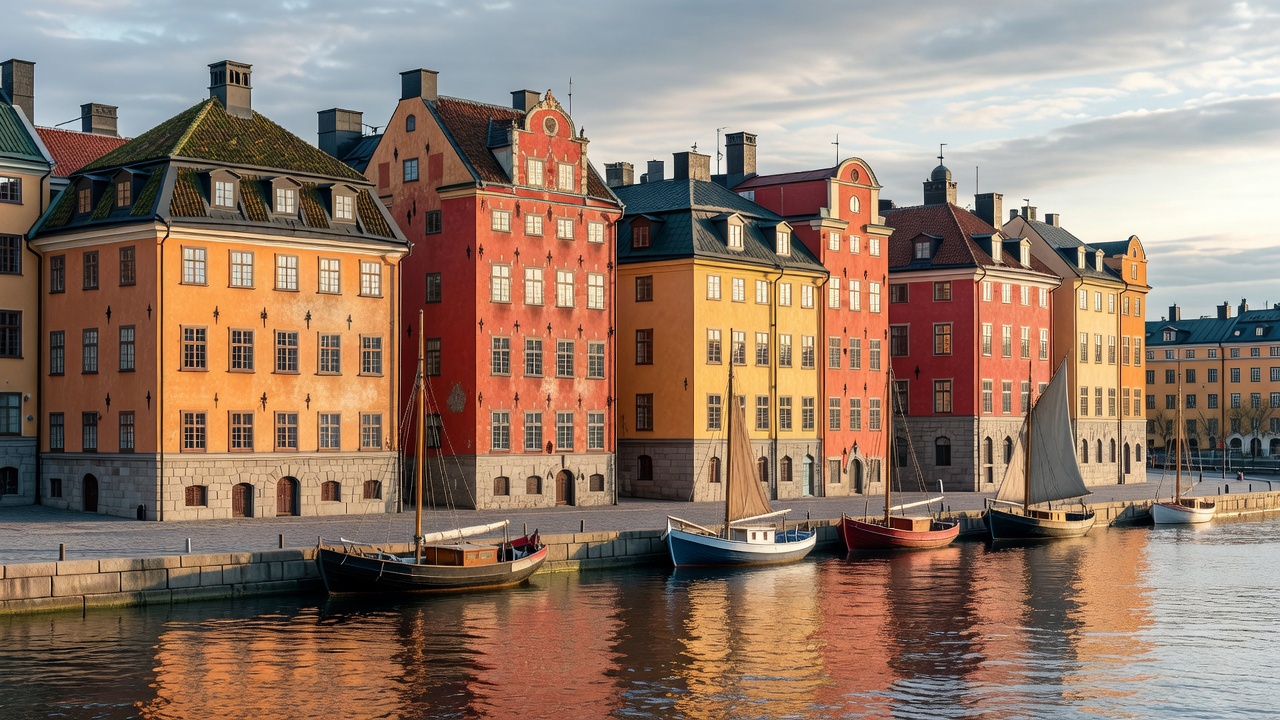
In Stockholm, give Gamla stan its own unhurried circuit, then choose a separate museum cluster. Vasa Museum and other Djurgården attractions fit together more naturally than repeated trips between distant districts. Cobblestones, winter ice and crowded streets can all slow a route. A shorter loop is often more rewarding than an ambitious list of interiors.
Helsinki offers a useful civic sequence around Senate Square, the railway station and Oodi Central Library. Extend towards Temppeliaukio Church only if your energy and the current visitor arrangements allow. These places are not interchangeable attractions: a public library, a working church and a civic square have different access expectations. Check official information rather than assuming all are open continuously.
In Oslo, the Opera House, waterfront promenades and the MUNCH area form a logical starting cluster. Check access and surface conditions before treating a rooftop walk as guaranteed. In Bergen, pair Bryggen with the harbour and leave hillside walks flexible around weather. In Reykjavík, Hallgrímskirkja and Harpa help anchor a central walk; wind can make a modest distance feel much longer.
Choose what to leave out
Write one sentence explaining why each city belongs in the trip. If two stops serve the same purpose, consider dropping one and adding a full day elsewhere. Give every city an indoor fallback and keep a major arrival day free of expensive timed entries. You are buying time in places, not just transport between them.
For local inspiration and current access details, consult Visit Copenhagen, Visit Stockholm, MyHelsinki and Visit Reykjavík. Use destination information to refine your interests, then verify transport separately.