Multi-country travel creates small costs and small inconveniences that accumulate. A station locker, an airport bus, a reservation supplement and a meal while waiting can change the value of an apparently cheap connection. Heavy luggage makes those same transfers slower. Treat money and packing as two sides of the same question: what makes this complete journey workable?
Build a route total, not a headline daily rate
Start with bookable essentials for your actual dates: accommodation, intercity transport and any required reservations. Add local travel, realistic food spending and selected attractions. Then separate optional activities from costs you cannot easily avoid. A single generic “Nordic daily budget” hides differences in room occupancy, season, route, exchange rates and personal comfort.
- SleepRooms, cabins, taxes and cancellation flexibility
- Move between citiesTickets, reservations, bags and terminal transfers
- Live locallyMeals, local transport, laundry and storage
- ExploreChosen museums, walks and excursions
- Keep a bufferReplacement travel or an unexpected overnight stay
Compare two versions of an expensive travel leg. One might use a cheaper non-refundable ticket with a tight connection; another might add a flexible fare or an extra night. The difference is the price of resilience. Decide deliberately rather than discovering after a delay that your cheapest option is also the least recoverable.
Central accommodation can be good value even when the room costs more. Calculate the added fares, commuting time and late-arrival implications of staying farther out. Conversely, a well-connected outer neighbourhood can work well for a longer stay. Read the actual transport timetable and access instructions instead of relying on a property’s broad claim to be “near the centre”.
Use the right currency assumptions
Denmark uses the Danish krone, Sweden the Swedish krona, Norway the Norwegian krone and Iceland the Icelandic króna. Finland uses the euro. Keep those currencies separate in your notes, then convert them into one comparison currency with a clearly recorded exchange rate. A similar-looking number is not a comparable price.
Cards are widely used, but do not make one card or one phone your only payment method. Check issuer fees, offline access and payment requirements for specific services. When offered a choice of billing currency, compare the conversion terms rather than assuming a terminal’s home-currency offer is cheaper. Keep a secure backup payment method separate from your main wallet.
Pack for lifting, waiting and weather
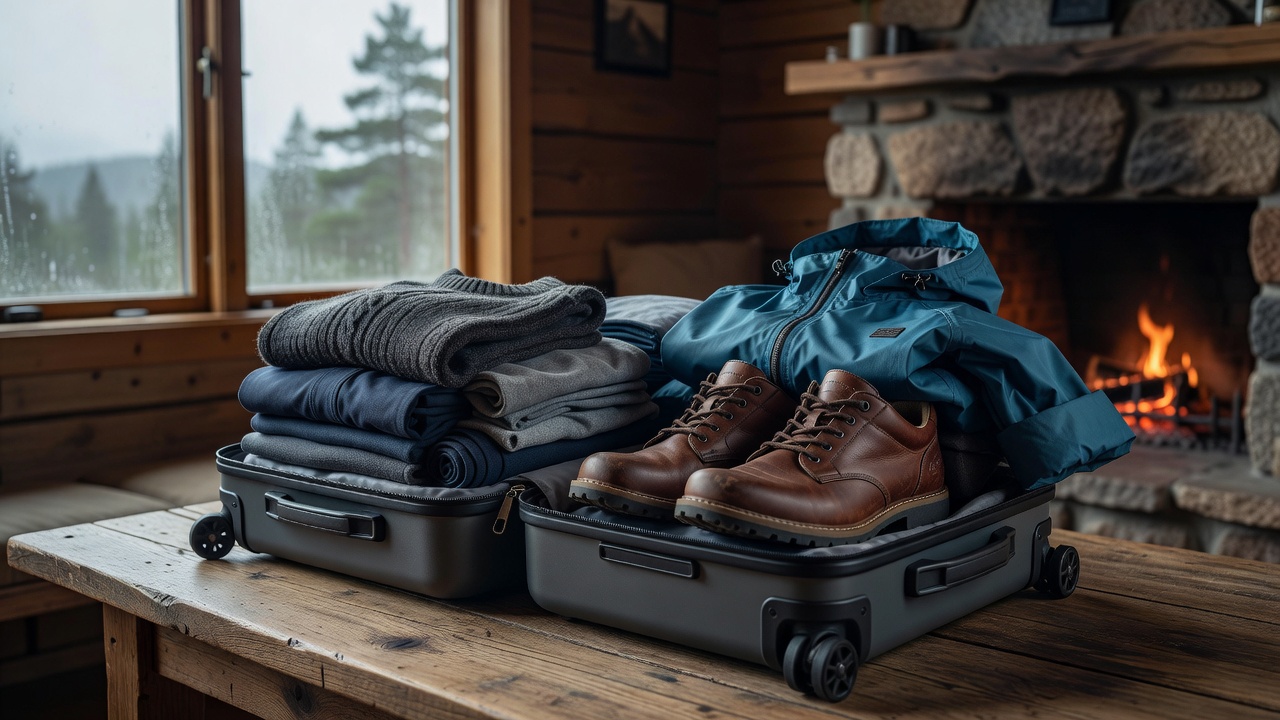
Before departure, lift your packed bag onto a high shelf and carry it up a flight of stairs. If that is uncomfortable at home, a crowded station will not improve it. Check luggage allowances with every airline and operator; a bag accepted on one leg may not meet another carrier’s dimensions or weight rules. Do not assume rail or ferry storage is unlimited.
Use layers rather than a single outfit intended to solve every condition. A weather-resistant outer layer, comfortable walking footwear and a warm mid-layer cover many urban situations, but winter can require substantially more protection. Check the forecast and the activities, not only the month. Reykjavík’s wind, Bergen’s rain and icy pavements each create different practical demands.
Keep an accessible travel-day pouch with documents, medication, essential charging equipment and a small amount of food where permitted. For an overnight ferry, add sleepwear and basic toiletries so you do not need to unpack everything in a compact cabin. Keep valuables with you and follow the operator’s storage instructions. Never rely on being able to return to a vehicle deck during the voyage.
Prepare the information as carefully as the bag
Save tickets, accommodation addresses and important contact details offline. Download local maps where useful, and carry a charging solution that meets the rules for each transport mode. Check mobile roaming with your provider: coverage arrangements and fair-use limits depend on your plan, even where regional roaming protections may apply.
Arrange appropriate travel insurance and read its conditions for missed departures, pre-existing medical conditions and planned activities. Healthcare arrangements depend on eligibility; do not assume a reciprocal healthcare card replaces insurance. Keep prescribed medication in suitable packaging and check any entry restrictions that apply to it.
Finally, plan a laundry opportunity instead of packing a fresh outfit for every day. Leave some capacity in your bag and avoid making the return journey harder than the outward one. The goal is not minimalist performance. It is enough comfort, enough weather protection and enough freedom to make each transfer without a struggle.