A useful itinerary survives contact with a delayed arrival, an afternoon of rain and the simple need to do laundry. Start by plotting the first and last nights around your actual entry and exit points. Then place the longest transfers. Only after that should you book major cultural visits. A sequence that needs every service to run perfectly is not a robust holiday plan.
The examples below allocate nights rather than pretending that every arrival day is a full sightseeing day. They exclude the journey from your home to the region. Check transport availability before copying any sequence, and adjust for mobility, children, sleep preferences and the season. The right number of stops is the number you can enjoy without repeatedly repacking in a hurry.
Seven nights: Copenhagen and Stockholm
Copenhagen · three nights
Use arrival day to settle in and walk locally. Give one full day to the harbour and central neighbourhoods, then another to a museum or a different district. Avoid building the first evening around a non-refundable timed entry.
Rail transfer · part of the next day
Choose a service for your exact date and allow time for accommodation access at the other end. Treat food, bags and station navigation as part of the day. Keep Stockholm’s arrival evening deliberately light.
Stockholm · four nights
Separate Gamla stan, a Djurgården museum day and a wider neighbourhood day. This leaves room to respond to the weather rather than forcing every outdoor walk into a fixed timetable.
This is a two-country trip with enough contrast to feel substantial. It also avoids a return journey if suitable open-jaw flights are available. Compare the full transport cost before choosing different entry and exit airports; sometimes a return ticket and additional rail leg are better value, but not always.
Ten nights: Copenhagen, Stockholm and Helsinki
A balanced starting allocation is three nights in Copenhagen, three in Stockholm, one aboard an overnight ferry and three in Helsinki. That totals ten nights, including the cabin night. The sailing needs to fit the selected dates, and a cabin is accommodation in transit rather than another full destination day.
Use the Stockholm stay to recover from the first intercity transfer before boarding the ferry. In Helsinki, keep the arrival morning flexible for disembarkation, local transport and luggage storage. Do not assume your room will be ready when the ship arrives. Finland’s one-hour time difference from Sweden also belongs in your calendar.
This route works best when the ferry is something you want to experience. If you dislike sleeping aboard, compare a flight and an additional hotel night instead. Replacing the ship changes the budget and night count, so rebuild the schedule rather than simply swapping transport labels.
Fourteen nights: a slower mainland sequence
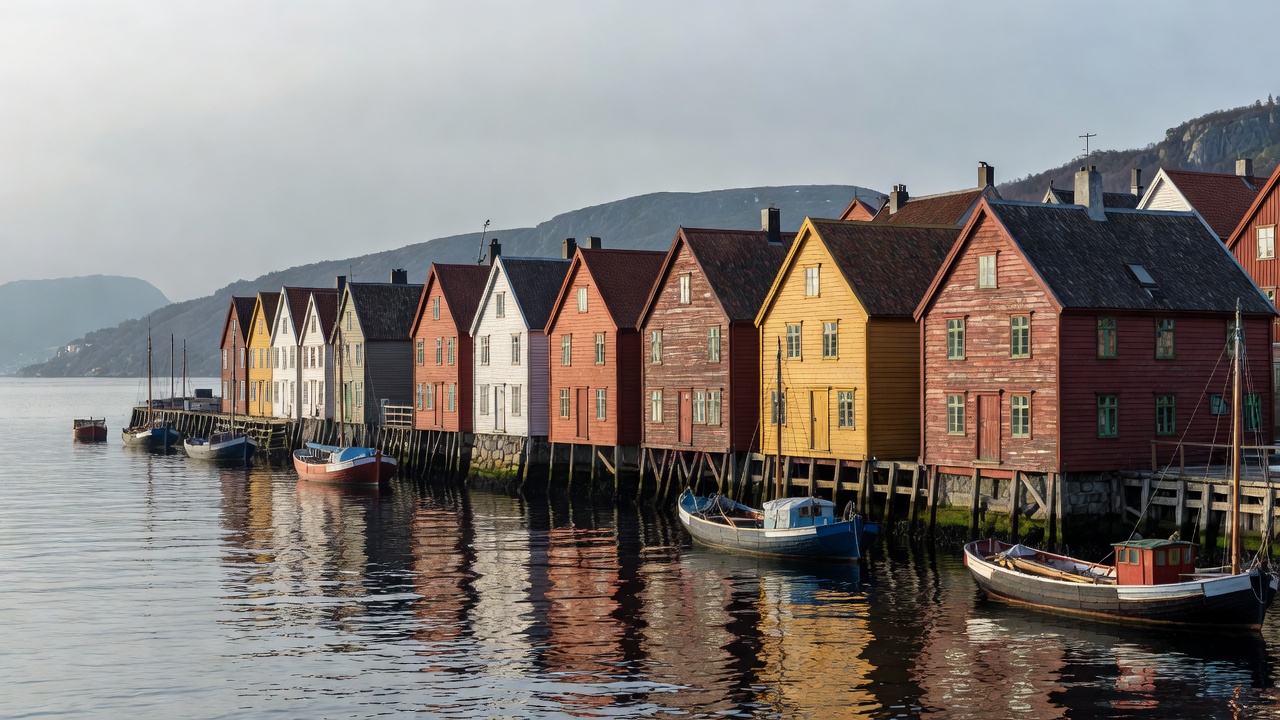
For a trip focused on Denmark, Sweden and Norway, consider three nights in Copenhagen, four in Stockholm, three in Oslo and four in Bergen. The night total is fourteen, but three intercity travel days still reduce sightseeing time. Verify the Stockholm–Oslo journey and the Oslo–Bergen service separately; international changes and rail works can affect the practical sequence.
Allow Bergen enough flexibility for a wet day and avoid treating a mountain or fjord excursion as weather-proof. If scenic travel is the priority, you may prefer to remove one capital and spend those nights within Norway. More time in one country can produce a richer trip than a faster sweep through several.
Add Iceland by subtraction
Reykjavík should not be squeezed into the margins as though it were another nearby rail stop. Add a flight, airport transfers and enough nights to justify the extra movement. If the total holiday length is fixed, remove a mainland stop instead of compressing every stay. A short Reykjavík visit and a wider Iceland road trip are different undertakings, with different transport, weather and insurance considerations.
Flights may make an Iceland chapter feasible, but a specific nonstop link should never be assumed year-round. Confirm current schedules, ticket conditions and airport details. Keep an important onward flight away from an ambitious same-day excursion, especially when weather could disrupt roads or services.
Stress-test before you book
Ask what happens if the longest transfer arrives late. Identify which hotel, sailing or flight would become difficult, and price the flexibility you need. Keep essential confirmations offline. For winter trips, cluster outdoor plans around daylight and verify seasonal attraction hours. For summer, book critical cabins and accommodation before assuming the preferred sequence remains available.
Finally, remove one optional activity from each destination day. The space is not wasted: it is where a longer lunch, a neighbourhood detour or an inconvenient connection can fit. A route should support the experience, not become the thing you spend the holiday trying to catch up with.